Modern vessel operators increasingly recognise terms like hybrid and electric from the automotive world. While the basic idea is similar, using an electric motor alone or in combination with a combustion engine, the maritime environment adds far more complexity. High power demands, unpredictable weather conditions, regulatory requirements and stricter safety considerations all influence how hybrid and electric propulsion can be applied at sea.
Despite these challenges, maritime electrification is accelerating because it reduces emissions, lowers operating costs and enhances vessel performance. Below is a high-level, practical explanation of how hybrid/electric propulsion works in High-Speed Vessels (HSV) and why the transition requires new thinking.
![[COVER] BOS TP_frontpager_selectyoutsupplier](https://hubspot-no-cache-eu1-prod.s3.amazonaws.com/cta/default/26627183/interactive-195315207413.png)
What is Hybrid and Electric?
Although fully electric cars can replace combustion engines in most situations, the same is not yet true for vessels. Battery technology is improving rapidly, but the power requirements offshore are significant, and charging infrastructure is still developing.
In the maritime sector, “hybrid” and “electric” generally refer to the following configurations:
Hybrid propulsion
Hybrid vessels combine diesel and electric propulsion in different architectures. The two most common approaches are:
-
Parallel hybrid – A diesel engine and an electric motor both connect mechanically to the same shaft or operate along parallel drivelines. The vessel can switch between diesel, electric or a combination depending on load, distance and operating profile.
-
Diesel-electric hybrid – An electric motor drives the propulsion shaft, while diesel generators produce electricity either to power the motor directly or charge the batteries.
Fully electric propulsion
Electric vessels rely entirely on battery power for propulsion:
- An electric motor is mechanically connected to the propeller and powered by batteries charged at the quay.
- Some fully electric vessels include additional generators — not for propulsion, but to supply hotel loads and onboard systems without compromising battery range.
Suggested reading: Understanding Hybrid/Electric HSC Service Requirements
Understanding the System as Whole
Hybrid and electric propulsion add new layers to already complex marine machinery. Still, the total maintenance and operating costs are typically lower, because electric components have fewer moving parts and generate less vibration and heat.
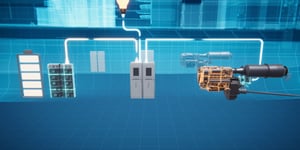
A complete system typically includes:
- Battery and Battery Management System (BMS)
- Electric motors
- Power and Energy Management Systems (PMS/EMS)
- Propulsion Control System (PCS)
- Human-Machine Interface (HMI)
- Alarm and automation systems (IAS)
- Purpose-built gearboxes and propellers
- Digital tools for monitoring, diagnostics and remote assistance
These components may come from different suppliers, so system integration becomes crucial. Integrators ensure mechanical, electrical and digital systems work together seamlessly — aligning safety logic, communication protocols and performance characteristics across the entire vessel.
Battery Technology: The Main Technology Driver
The battery is both the enabling technology and the greatest challenge in maritime electrification. Batteries are generally divided into:
- Power batteries – Deliver high power quickly, suited for acceleration or quick bursts.
- Energy batteries – Deliver lower power over longer periods, suited for endurance.
Different chemistries also vary in charging speed, energy density and thermal behaviour. Operators must balance power needs, charging intervals and vessel range, and this varies heavily by vessel type and mission.
Additional reading: How Digitalisation and Cloud Technology Optimise Your Marine Operation
New Technology, New Considerations
Electrification adds operational factors not present in diesel systems. Charging infrastructure is still limited in many regions, and high-voltage charging depends on local grid capacity. While diesel fuel can be delivered virtually anywhere, electric vessels may require scheduled charging stops or specific quay facilities.
Experimental battery chemistries are emerging, but widespread commercial adoption will take time. Until then, operators must carefully match technology selection to route predictability, environmental conditions and operational flexibility.
Your Operational Profile Decides
Whether a vessel should be fully electric or hybrid depends almost entirely on its intended mission.
-
Fully electric works best when routes are predictable, distances are short and conditions are stable — such as shuttle ferries, passenger routes or sightseeing cruises.
-
Hybrid is preferable when the vessel must complete varied, unpredictable or long-range missions — such as CTVs, SAR vessels, pilot boats or workboats.
System integrators play a central role in defining these boundaries, ensuring the vessel gets only the technology it needs — and nothing that compromises safety or adds unnecessary cost.
Emerging Capabilities and Benefits
Despite the challenges, the benefits of maritime electrification are substantial. Beyond emission reduction and fuel savings, operators gain:
- Lower maintenance due to fewer mechanical parts
- Rich real-time data that enables fleet-wide optimisation
- More predictable operating costs
- Stronger environmental compliance and lower regulatory risk
- Improved work environment with less noise and vibration
- Higher future resale value
- Reduced OPEX thanks to lower fuel consumption and efficient power use
As adoption expands, battery cost will decrease, component availability will improve and flexibility in system configuration will increase.
Read more: Reducing Risk When Acquiring A Zero/Low-Emission Maritime Vessel
Conclusion
Choosing between hybrid and fully electric propulsion depends on the vessel’s operational profile. Low- or zero-emission vessels cannot replace diesel in every maritime mission — yet. Battery limitations, environmental unpredictability and maritime safety requirements all shape what is possible.
However, even partial electrification brings major benefits. With the right system integrator, operators can implement a hybrid or electric configuration that is efficient, safe and future-proof, while still allowing for gradual upgrades as technology matures.
Electrification is not just an environmental decision; it is a strategic investment that improves operational stability, reduces long-term costs and positions operators to meet future regulatory demands.